10 Signs You May Be Pregnant While Breastfeeding
When you’re breastfeeding, it’s easy to think you’ll “just know” if you’re pregnant again. But honestly? Many moms don’t. I see this all the time in my work as a lactation consultant. When you’re nursing, your hormones work a little differently, your menstrual cycle may be irregular, and the usual early pregnancy symptoms can blend right into everyday mom life.
It is important to know that it IS possible to get pregnant while breastfeeding, but it can be trickier to know that you are. There are also a few signs that may point toward pregnancy.
Decrease in milk supply
Baby refusing to nurse
Change in taste of breast milk
Very sore nipples
Excess tiredness
Cramping
Of course, you may experience any number of early pregnancy signs, but the ones listed above are some of the ones that are more associated with breastfeeding. Keep reading to learn more about each of these symptoms.
But First, Meet Katie - The Lactation Consultant Behind The Breastfeeding Mama
Hey friend! I’m Katie - an International Board Certified Lactation Consultant (IBCLC), mom of four, and the creator of The Breastfeeding Mama.
My passion for lactation began after walking through my own ups and downs with breastfeeding - the confusion, the tears, the pain, the middle-of-the-night breakdowns. I never wanted a mom to go through what I did, so I started a breastfeeding Facebook group. Fast forward 10 years, and now I help other moms across the globe find confidence in their breastfeeding journey.
Here, you’ll find simple, evidence-based guidance for breastfeeding, pumping, and milk supply. While I am a lactation consultant, I’m probably not yours, so remember, all advice here is for educational purposes only. Be sure to consider booking a virtual consult for 1:1 support or grabbing one of my many helpful digital resources.
10 Signs You May Be Pregnant While Breastfeeding
Let’s dive a little deeper into some of the signs that you might be pregnant while breastfeeding.
1. A Drop in Milk Supply
This is one of the biggest clues and first signs that you might be pregnant. Whenever a mother says to me that her supply has dropped, I always ask about pregnancy.
During early pregnancy, rising hormones often cause milk supply to dip. Some moms feel the change almost right away, while others notice it closer to 8–12 weeks. Later in pregnancy, your milk naturally changes into colostrum, which is normal and safe for your child to drink - but the amount is usually much lower.
But heads up:
A sudden decrease in milk supply can also happen for tons of other reasons (stress, illness, pump issues, breastfeeding patterns, dehydration, hormone birth control, or even not fully emptying). So if pregnancy is possible, take a test to be sure.
2. Baby Starts Refusing the Breast
Your baby may pull away, fuss, or seem frustrated. This can be because:
the taste of your milk has changed
your supply has dropped
the flow feels different
they just “feel” something is off (baby’s are very intuitive!)
Some babies don’t care at all… others notice everything.
3. Change in the Taste of Your Milk
Breast milk can taste saltier or just slightly “off” during early pregnancy. If your toddler is verbal you may even hear, “Yucky milk!” (Yes, I’ve heard that more than once in consults!)
4. Very Sore Nipples
This is another very common sign, especially when it comes out of nowhere after months of pain-free breastfeeding.
Many moms tell me their nipple soreness in early pregnancy feels completely different from normal breastfeeding sensitivity - sharper, more intense, and almost instant with latch. If your nipples suddenly feel like they’re on fire for no clear reason, pregnancy could be possible.
5. Nursing Aversion
This is something I see very frequently - especially as a pregnancy progresses. Moms describe:
feeling anxious or irritated during feeds
feeling “touched out” the moment baby latches
a strong desire to stop breastfeeding
Hormonal shifts can make nursing feel harder emotionally. It’s easy to feel guilty if you experience this, but it’s important to know that this is very normal during pregnancy.
6. Extra Tiredness
Feeling tired can be a normal part of motherhood, but there’s a different level of tired that can show up when you’re pregnant and breastfeeding. Your body is growing a baby while making milk. It’s a lot of work, and exhaustion is common.
7. Cramping or Uterine Tightness
Breastfeeding naturally releases oxytocin, which can lead to light uterine contractions. Some moms notice cramping early on in pregnancy because of this. It’s usually normal, but if you have a high-risk pregnancy, check in with your provider to make sure you are safe to continue breastfeeding. Most moms can continue to breastfeed throughout pregnancy, but there are some situations where it may be better to stop.
8. Extra Clingy Baby
Children are pretty intuitive. Sometimes your baby or toddler senses a shift before you notice anything yourself. A sudden clingy phase - especially if it feels “different” - can be another subtle sign.
9. Missed or Irregular Period
If your cycle has returned and suddenly goes missing, pregnancy is possible. Even if you haven’t had a period yet, you can still conceive because you ovulate before your first postpartum period.
This is why many moms become pregnant before their menstrual cycle returns.
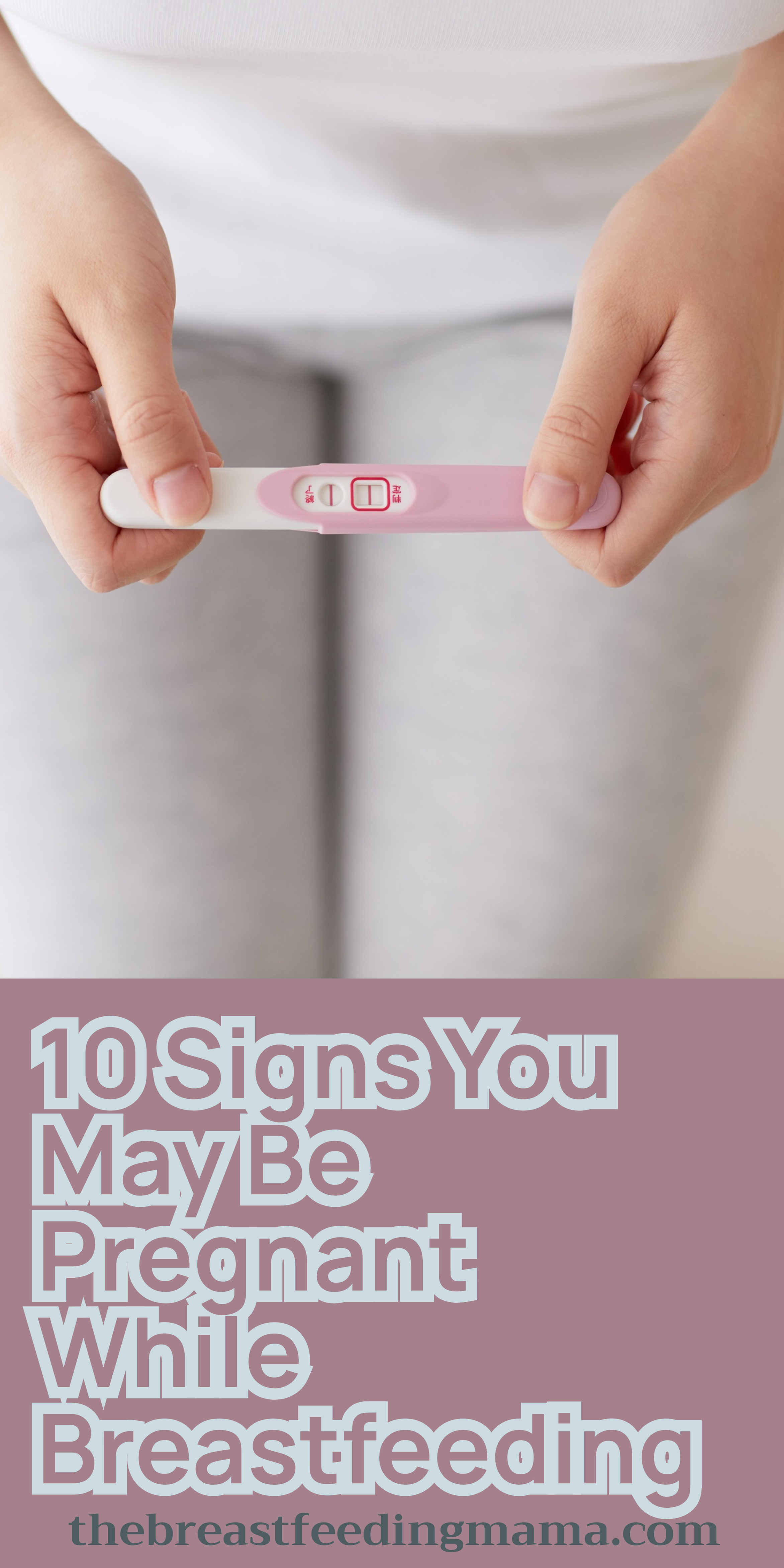
10. Positive Pregnancy Test
Of course, the clearest answer is a positive test. False positives are pretty rare. If you get one, reach out to your OB or midwife for a blood draw to confirm your HCG levels.
Can You Be Pregnant While Breastfeeding and Not Know?
I’ve seen many breastfeeding moms go several weeks - sometimes months - before realizing they’ve conceived. While breastfeeding can be a method of birth control in early postpartum, it only works when all Lactation Amenorrhea Method (LAM) criteria are met:
Baby is under 6 months
Baby is nursing at least 8–12 times in 24 hours
Baby is waking at night to feed
No bottles or pacifiers
No solids
No return of your period
If any of these start to change, your chances of getting pregnant go up.
And many moms assume they won’t ovulate until after their first period returns. But again - you ovulate before your first period. This is why breastfeeding pregnancies can feel like a surprise.
This is why I recommend a device like TempDrop. It allows you to track ovulation and temperature changes to know when your cycle might be returning - before it actually does. I use this device myself, and you can save 15% (on top of any other sales they are having) when you go through this link or use the code AFBREASTEEDINGMAMA.
Signs of Ovulation While Breastfeeding
Your ovulation signs may be harder to spot while nursing, but possible signs include:
increased cervical mucus
mild cramping
a temperature shift (if you track basal temps or use a device like TempDrop)
a stronger libido
mid-cycle spotting
Some moms notice a temporary dip in supply around ovulation as well.
When Should I Take a Pregnancy Test While Breastfeeding?
You may want to test if:
Your period is late or missing
You’ve had unprotected sex and are not using another form of birth control
You notice several symptoms from the list above
You had recent signs of ovulation but your period did not star
If your cycles are irregular, pick a day each month to check - or test 14+ days after a suspected ovulation.
What Happens If You’re Pregnant While Breastfeeding?
Most moms can safely continue to breastfeed during pregnancy. Your body will prioritize the growing baby, so your supply may drop, and the taste of your milk will change as colostrum comes in.
Common things I see:
Some babies naturally wean when supply drops
Some continue happily until the new baby is born
Some dry-nurse for comfort
Toddlers may go back and forth depending on the day
You do not have to stop breastfeeding unless:
you’re high-risk (especially for miscarriage or preterm labor)
you’re having strong uterine contractions
your provider recommends it (though you ultimately get to choose what works for your body and your family.)
you personally want to wean
If You Think You’re Pregnant, Here’s What to Do
1. Call Your Provider
They can confirm your pregnancy and help you decide what’s best for your specific situation. A blood test is probably going to be most accurate!
2. Start (or Continue) a Prenatal Vitamin
Growing a baby while breastfeeding increases your nutritional needs.
3. Consider Your Feeding Plan
If your baby is under one, you may need donor milk or formula if your supply dips. If your baby is over one, you can add whole milk or other solids as needed.
4. Decide If You Want to Keep Breastfeeding
There’s no right or wrong choice here. Some moms keep nursing through pregnancy, some choose to stop, and others try tandem nursing once the baby is born.
5. Reach Out For Support
A prenatal breastfeeding consult can make a huge difference - especially if you’re overwhelmed or unsure how pregnancy may affect feeding. Click here to book one with my team today!
Being pregnant while breastfeeding can feel confusing, surprising, or even overwhelming. But you’re not doing this alone. With good information and the right support, you can make the best choices for yourself, your current baby, and the one on the way.
If you notice any of these pregnant while breastfeeding signs, trust your instincts and take a test. And if you ever need help with milk supply, weaning, or navigating pregnancy while nursing, I’m here to help you every step of the way.